
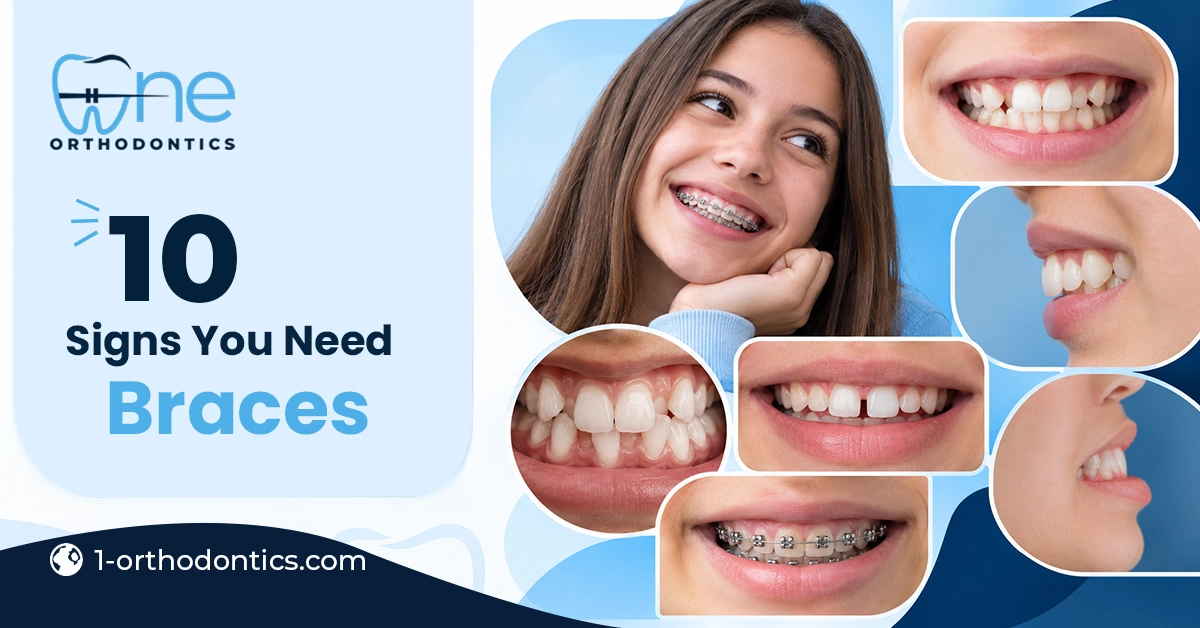
Wondering if you need braces? You are certainly not alone in this thinking. There are signs you need braces to watch out for that can help you determine if you need braces. Most of us will notice one or two hints here or there that indicate we need to visit the orthodontist. By catching these signs early, the process of getting braces can be much simpler and smoother. At One Orthodontics, Braces in Fredericksburg, VA, we help everyone, young and old. We show you the signs that mean you might need braces. We also provide the answers you're seeking. Check out the list below for the top signs you may need braces, and book your free consultation with us today to get started!
Braces are orthodontic devices that help to straighten and align teeth. The braces exert gentle, steady pressure upon the teeth to guide them into their proper positions. Many types of braces exist today, and the braces of today are more comfortable and less noticeable to wear than the braces that were common in the past. Braces help straighten teeth and improve smiles. They also prevent future problems caused by misaligned teeth.
Here are the most common signs that you may need to get braces. They can be noticed during the course of your day while eating, brushing your teeth, or talking. Read through this list to see if you think that you may be a candidate for braces.
1. Crowded teeth
Crowded teeth are difficult to clean, which can lead to plaque building up on your teeth and causing tooth decay. If your teeth are crowded, braces can help to move them and give you a straight, healthy smile.
2. Gaps between teeth
There can be gaps between your teeth for a variety of reasons. Some gaps between teeth are harmless, while others may affect how your teeth work together when eating or talking. Braces can close up these gaps for you.
3. Overbite
An overbite occurs when your upper teeth protrude over your lower teeth. This can sometimes lead to issues with how your teeth wear down over time and may result in an uneven bite. Braces can move your teeth into place so that your top and bottom teeth meet evenly.
4. Underbite
An underbite occurs when your lower teeth jut out over your upper teeth. This can create issues with how you eat, talk, and the balance of your face. Correcting an underbite can improve both the health of your teeth and your face.
5. Crossbite
A crossbite is a condition in which your upper teeth bite on the inside of your lower teeth. Issues with how your teeth bite together can lead to problems with your jaw and your teeth wearing down. Braces can move your teeth into position so that your upper teeth bite on the outside of your lower teeth.
6. An Open Bite
A gap exists between the top and bottom rows when an open bite occurs in the oral cavity. Consuming sustenance and articulating words become difficult tasks when teeth do not meet. Dental instruments like braces function to pull the teeth into a single line. Improved mastication and vocal clarity are achieved through this correction.
7. Difficulty Flossing or Brushing
Dental floss might tear, or the cleaning tool fails to enter narrow gaps because teeth are crowded. Cavities are often found in individuals who possess teeth that are difficult to sanitize. It has been observed that hygiene remains simple when the arrangement of the mouth is straight. Because the teeth are aligned, health is maintained with less effort.
8. Jaw Pain, Clicking, or Fatigue
Muscle exhaustion or sounds from the bone joints can happen while a person is consuming sustenance. The jaw must exert extra force because the top and bottom rows do not match perfectly. Many dental patients report that fixing the position of the teeth removes the physical strain. Relief is felt when the bite is corrected by a medical professional.
9. Speech Changes or Trouble Chewing
The way a person communicates or consumes sustenance changes when teeth are not straight. Issues such as biting the inner skin or producing strange sounds often occur during daily activities. Braces offer a solution by ensuring the mouth closes in a natural way. Comfort is felt by the patient when the teeth are positioned correctly.
10. Teeth Shifting After Past Treatment (Relapse)
Adults often used dental tools in the past but stopped using the plastic retainer later. The teeth move back to old spots because the mouth is always changing. It is stated by many medical professionals that such movement is a natural process. A beautiful appearance is restored when a person chooses to wear braces again.
Mini takeaway: Identifying these symptoms does not require a person to seek treatment right away. A Consultation with a medical professional is worth the time of the patient. The health of the mouth is considered significant because proper alignment prevents future problems.
Here is a surprise: you can still need braces even when your smile looks straight! Orthodontics is not just about the look of your teeth, it is about how your teeth fit together. Your front teeth might be aligned perfectly, but the teeth in the back of your mouth might not be fitting properly. This can cause problems with the way that you eat, it can wear down your teeth over time, and it can shift your jaw when you bite down. A simple examination of your teeth will give you a better picture of the state of your bite and allow you to find a way to correct any problems.
Great news - it is never too early or too late to have a healthier smile! Here is a quick guide for each age group regarding the right time to get braces.
The ideal age for children to have their first orthodontic check is around age seven. An early orthodontic check does not always mean that a child will require braces at this age. The goal of an early orthodontic check is to let the orthodontist evaluate the child's jaw and teeth. This way, any potential issues can be fixed before they turn into major problems later.
The teen years are one of the most popular times for individuals to undergo orthodontic treatment and get braces. The braces are designed to work well with the growth of a teen's mouth and there are a variety of options to fit with a teen's lifestyle. Having perfectly aligned teeth boosts a child's confidence and satisfaction. It's an investment in their self-esteem.
It is never too late for an adult to undergo orthodontic treatment and get braces. Many adults get braces to fix shifting teeth. This can happen due to previous treatment, old relapse, or bite issues. There are a variety of options for braces that can fit the lifestyle and the comfort needs of an adult. Your dream smile is still an option for an adult regardless of age!
Both braces and clear aligners straighten teeth beautifully, so which one wins for you? Braces are often the best choice for complex crowding, tricky bite correction, or big tooth movement. Clear aligners shine for milder cases and offer a subtle, removable option many adults and teens love. The truth is, the right pick depends on your smile, your goals, and your daily routine. Want a deeper look? Read our guide, Clear Aligners vs Braces: Which Is Right for You?, then let our team recommend the perfect fit.
Booking braces in Fredericksburg, VA is easy, welcoming, and completely pressure-free! Here is how your smile journey unfolds at One Orthodontics.
Every step is calm, clear, and designed around your comfort. You will always know what comes next!
One visit brings clear answers with zero pressure! If any of these signs sound familiar, a complimentary consultation is the easiest first step. We accept most major insurance plans, proudly welcome Medicaid and State Insurance for patients under 21, and offer flexible financing to fit your budget. Your best smile is waiting, and our warm Fredericksburg team is here to help. Call One Orthodontics today or book online to get started!
See the signs you need braces? Contact One Orthodontics today and take the easy first step toward your healthiest, happiest, most confident smile!
Q: How do I know if I need braces?
You may need braces if your teeth are crowded, spaced, or crooked, or if your bite feels uneven. Jaw soreness, trouble flossing, and chewing on one side are other common clues. A quick professional evaluation gives you clear, confident answers.
Q: What are the most common signs you need braces?
The most common signs you need braces include crowding, gaps, overbite, underbite, crossbite, and open bite. Jaw pain, difficulty cleaning your teeth, and speech changes are also frequent signals. Noticing a few is a great reason to book a check.
Q: When should you get braces?
Children should have a first orthodontic check around age seven, while teens often start as adult teeth arrive. Adults can begin at any age! There is no wrong time to start your smile journey.
Q: Can adults get braces?
Yes, adults can absolutely get braces! Many choose treatment for shifting teeth, old relapse, or bite comfort. Modern braces and aligners are comfortable, effective, and discreet.
Q: Are braces or clear aligners better?
Braces are often better for complex crowding, bite correction, or large tooth movement. Clear aligners suit milder cases and offer a subtle, removable choice. A consultation reveals your ideal option.
Q: How much do braces cost in Fredericksburg, VA?
The cost of braces varies by case and treatment length. One Orthodontics accepts most insurance, welcomes Medicaid and State Insurance for patients under 21, and offers flexible financing. Your free consultation includes clear, no-surprise pricing.
Q: Do I need braces if my teeth look straight?
You might still need braces even if your teeth look straight, because alignment is about how teeth fit together. Uneven back teeth or a shifting jaw can hide behind a straight-looking smile. A simple check is always worthwhile.
The best experience ever! The staff is amazing and welcoming. They accepted my challenging teeth. I highly recommend them. The... read more

 Juan L.
Today, I walked into One Orthodontics feeling like a bundle of nerves, unsure about choosing braces or Invisalign. From the... read more
 Odra L.
The doctor consistently offered attentive and comprehensive orthodontic care, carefully examining every aspect. The entire team, including the reception staff,... read more
 DANNY J.
The free consult was a great experience—I’m excited to get started with the treatment
 Isaias C.
I had a wonderful experience with their free consultations, and I’m really excited to begin their treatment!
 Sokhan S.
Highly recommend the this practice. I had an excellent experience, the staff was very friendly and knowledgeable. Dr. Mohammed did... read more
 Taher A.
had a really good experience with their free consultations and can't wait to start their treatment.
 Roberth M.
I just wanted to say thank you to Dr. Mo and the entire team for such a great experience! From... read more
 Hamza S.