
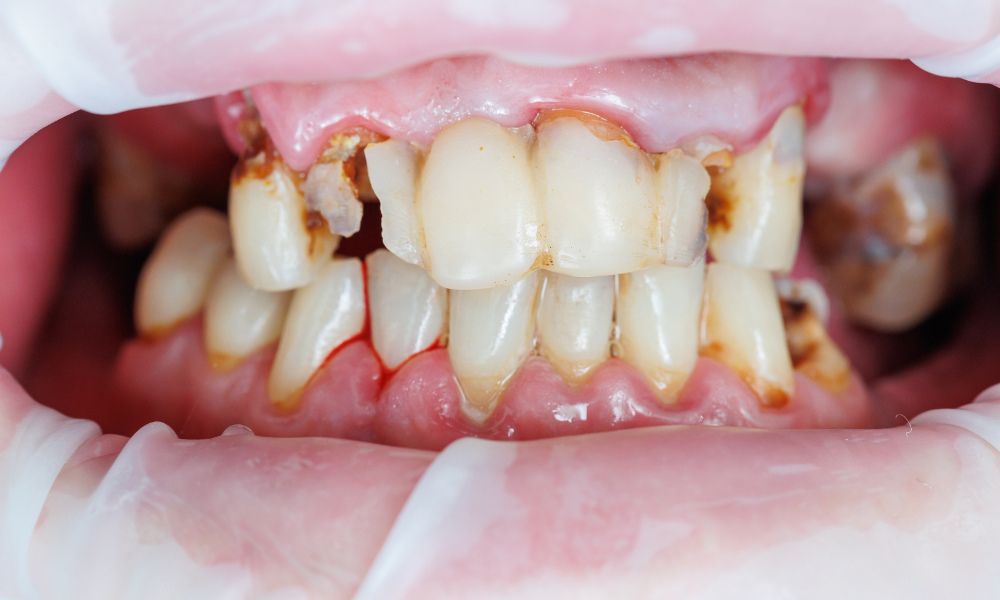
A cavity can begin forming within weeks, but visible decay usually develops over several months to years depending on plaque exposure, tooth structure, and alignment. The rate is not fixed. It changes based on how long bacteria remain on the tooth surface and how easy that area is to clean.
At One Orthodontics, alignment and bite are evaluated as part of long-term oral health because tooth position directly affects how quickly decay can develop in certain areas.
How long does it take for a cavity to form? There is no single timeline for every patient or tooth. Early enamel demineralization may begin within weeks when plaque remains undisturbed, while a visible hole usually develops over a longer period. The speed depends on the tooth surface, brushing habits, fluoride exposure, saliva flow, diet, and how frequently the teeth face acid attacks.
Tooth decay begins when plaque bacteria use sugars from food and drinks to produce acids. These acids remove minerals from enamel. Early mineral loss may still be stopped or reversed before the enamel surface breaks down and becomes a cavitated lesion.
Example:
If plaque stays trapped between overlapping teeth, the progression may move faster than on smooth, accessible surfaces.
When patients ask how long do cavities take to form, they are often referring to a visible hole. However, tooth decay begins before a hole, dark spot, or painful symptom appears.
White spot lesions are early signs of enamel demineralization and may not always progress into cavities. Their progression depends on whether harmful conditions continue or protective measures allow the enamel to regain minerals.
Misaligned teeth increase cavity risk by creating areas that are harder to clean.
When alignment is compromised:
This is why bite correction is often evaluated when patients experience repeated decay in the same location. Learn more about how alignment is addressed through bite correction.
Patients frequently ask, can a cavity form in a week? A completely new, visible cavity is unlikely to appear in seven days on a previously healthy tooth. However, repeated acid exposure can begin weakening enamel during that period, particularly where plaque is already established.
Certain conditions can increase the risk of rapid enamel damage:
A tooth that appears to have developed a cavity within one week may already have contained early decay that was difficult to see.
Cavity progression accelerates when multiple risk factors combine.
High-Risk Factors:
If crowding is present, then plaque removal becomes less effective, which may increase decay speed.
Cavity progression slows when plaque is removed consistently and surfaces are accessible.
Protective Conditions:
Orthodontic treatment such as braces or clear aligners is typically recommended when alignment prevents proper cleaning.
Example:
After alignment correction, patients often report easier flossing and fewer areas where plaque accumulates repeatedly.
Can a cavity form in 2 weeks? Early enamel changes can become detectable within this period, especially when plaque remains around crowded teeth, orthodontic brackets, or other difficult-to-clean surfaces. Research has reported that white spot lesions may appear within two to four weeks under high-risk conditions.
This does not mean every white spot is already a permanent hole. At the initial stage, the enamel surface may remain intact. Prompt plaque removal, fluoride exposure, dietary changes, and professional evaluation may help stop further progression.
Patients should arrange an examination when they notice:
Both options improve alignment, but hygiene access differs.
Braces:
Clear Aligners (Invisalign):
Explore treatment differences through Invisalign and aligner-based care.
If hygiene access is the main concern, then removable aligners may be considered.
If structural bite issues exist, then braces may be recommended.
Repeated decay in the same area may indicate an underlying alignment issue.
Watch for:
In more complex cases involving jaw structure, surgical orthodontics may be part of treatment planning.
Q: Can a cavity form in 2 weeks?
Yes. Early enamel damage may begin within 2–4 weeks if plaque is not removed.
Q: Why do cavities form faster in some teeth?
Teeth that are crowded, rotated, or positioned improperly tend to retain plaque longer.
Q: Do straight teeth prevent cavities?
Straight teeth do not prevent cavities completely, but they are typically easier to clean, which may reduce risk.
Q: How do retainers help after treatment?
Retainers, such as those explained on the retainers page, help maintain alignment, which supports long-term hygiene.
Cavity development is influenced by plaque exposure, but also by how tooth alignment and bite affect how easily each surface can be cleaned. Areas with crowding, rotation, or uneven contact points may allow bacteria to remain active longer, which can increase the rate of decay. Patients can compare clear aligners vs braces to understand which treatment best supports their alignment and hygiene needs.
If you are noticing recurring buildup in the same areas or difficulty cleaning between certain teeth, it may be helpful to evaluate whether alignment or bite position is contributing to the issue. At 1 Orthodontics, this type of assessment is used to determine whether structural correction may support long-term oral health, and you can request an evaluation through our contact page.
I had a wonderful experience with their free consultations, and I’m really excited to begin their treatment!

 Sokhan S.
I just wanted to say thank you to Dr. Mo and the entire team for such a great experience! From... read more
 Hamza S.
Today, I walked into One Orthodontics feeling like a bundle of nerves, unsure about choosing braces or Invisalign. From the... read more
 Odra L.
had a really good experience with their free consultations and can't wait to start their treatment.
 Roberth M.
Highly recommend the this practice. I had an excellent experience, the staff was very friendly and knowledgeable. Dr. Mohammed did... read more
 Taher A.
The best experience ever! The staff is amazing and welcoming. They accepted my challenging teeth. I highly recommend them. The... read more
 Juan L.
The doctor consistently offered attentive and comprehensive orthodontic care, carefully examining every aspect. The entire team, including the reception staff,... read more
 DANNY J.
The free consult was a great experience—I’m excited to get started with the treatment
 Isaias C.